
Discover the Beauty and Traditions of a Meitei Manipuri Wedding
A Traditional Meitei Manipuri Wedding: Rituals, Traditions, and Significance
Explore the vibrant customs, meaningful rituals, and cultural significance of a traditional Meitei Manipuri wedding. A celebration of love, traditions, and family values.
Introduction
A Meitei Manipuri wedding is a beautiful blend of vibrant rituals, cultural heritage, and family traditions. Rooted in the rich Manipuri culture, these weddings symbolize love, unity, and blessings for a lifetime. From elaborate rituals to heartfelt celebrations, a Meitei wedding is a mesmerizing experience. Let’s take a closer look at the enchanting traditions and customs that make these weddings truly unique.
1. Pre-Wedding Rituals
a. Hinaba (The Proposal):
The formal marriage discussions start with Hinaba, where both families meet to propose and finalize the wedding alliance after careful consideration of the bride and groom’s horoscopes.
b. Yathang Thanaga (Final Approval):
Once the families agree, they seek blessings from elders and fix the wedding date as per the auspicious Manipuri calendar.
c. Waroipot (Engagement Ceremony):
The groom’s family presents fruits, sweets, and symbolic gifts to the bride’s family. It signifies acceptance of the alliance and marks the start of wedding preparations.
2. The Wedding Ceremony
a. Luhongba (The Main Wedding):
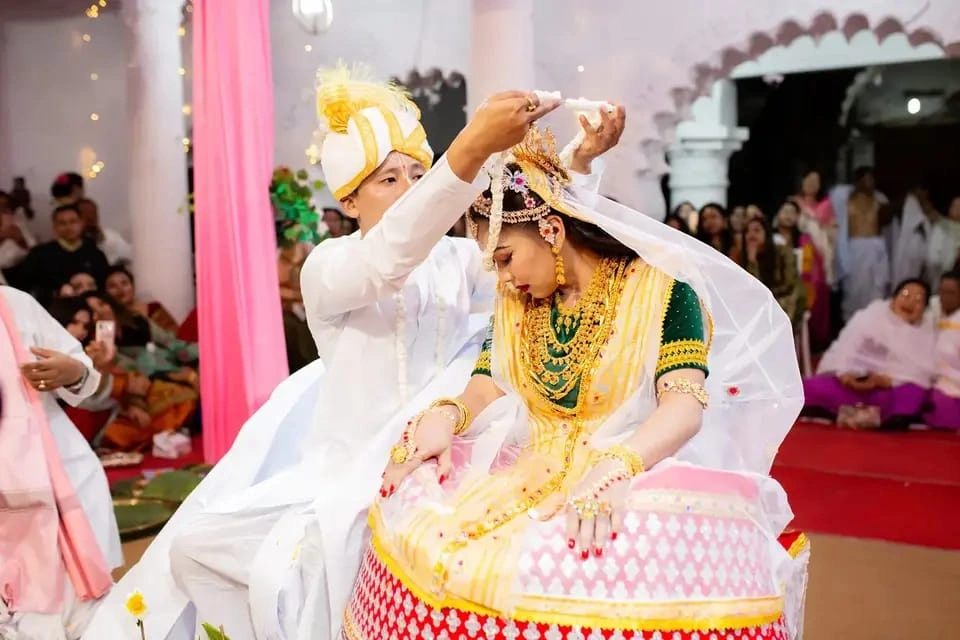
The wedding day begins with the bride and groom dressed in traditional Manipuri attire. The groom wears a Khamen Chatpa, and the bride dazzles in the traditional Potloi, an intricately designed cylindrical skirt adorned with mirrors and embroidery.
b. Phire Hanba (Sacred Rituals):
The wedding takes place in the presence of elders, a priest, and family members. A series of rituals are performed, such as prayers to the gods, exchanging garlands, and blessings for the couple’s prosperous future.
c. Heijingpot (Gift Exchange):
The bride and groom exchange betel leaves and nuts as a symbolic gesture of their commitment and respect for each other.
3. Post-Wedding Rituals
a. Mangani Chakouba (The First Feast):
After the wedding, the bride’s family hosts a grand feast for the groom’s family, symbolizing unity and bonding between both sides. Traditional Manipuri cuisine is served with love and warmth.
b. Ebudhou Thaba (Seeking Blessings):
The newlyweds visit local shrines and seek blessings from elders and deities for a happy and harmonious married life.
4. Traditional Attire and Music
The visual splendor of a Manipuri wedding is incomplete without the stunning traditional outfits. The bride’s Potloi is truly a masterpiece, while the groom’s Khamen Chatpa complements the attire beautifully.
Accompanied by classical Manipuri music and Pung Cholom (drum dance), the wedding atmosphere is filled with joy, devotion, and celebration.
5. Significance of a Meitei Wedding
Meitei Manipuri weddings are not just about rituals; they hold deep cultural significance:
- Unity of Families: Marriage is seen as the coming together of not just two individuals but their families as well.
- Preserving Traditions: Every ritual honors the rich heritage of Manipuri culture.
- Blessings for Prosperity: The ceremonies revolve around seeking blessings for happiness, peace, and a prosperous life for the couple.
Conclusion
A Meitei Manipuri wedding is a stunning showcase of tradition, love, and cultural pride. Each ritual carries its own meaning, weaving together families, blessings, and traditions into a celebration to remember.
If you’re planning a Manipuri wedding or are curious about its beauty, let Reliable Matrimony guide you to your perfect partner.
CTA:
Looking for your dream match? Join Reliable Matrimony and take the first step toward your happily ever after!
We write rarely, but only the best content.